Publications
The Unmapped Woman
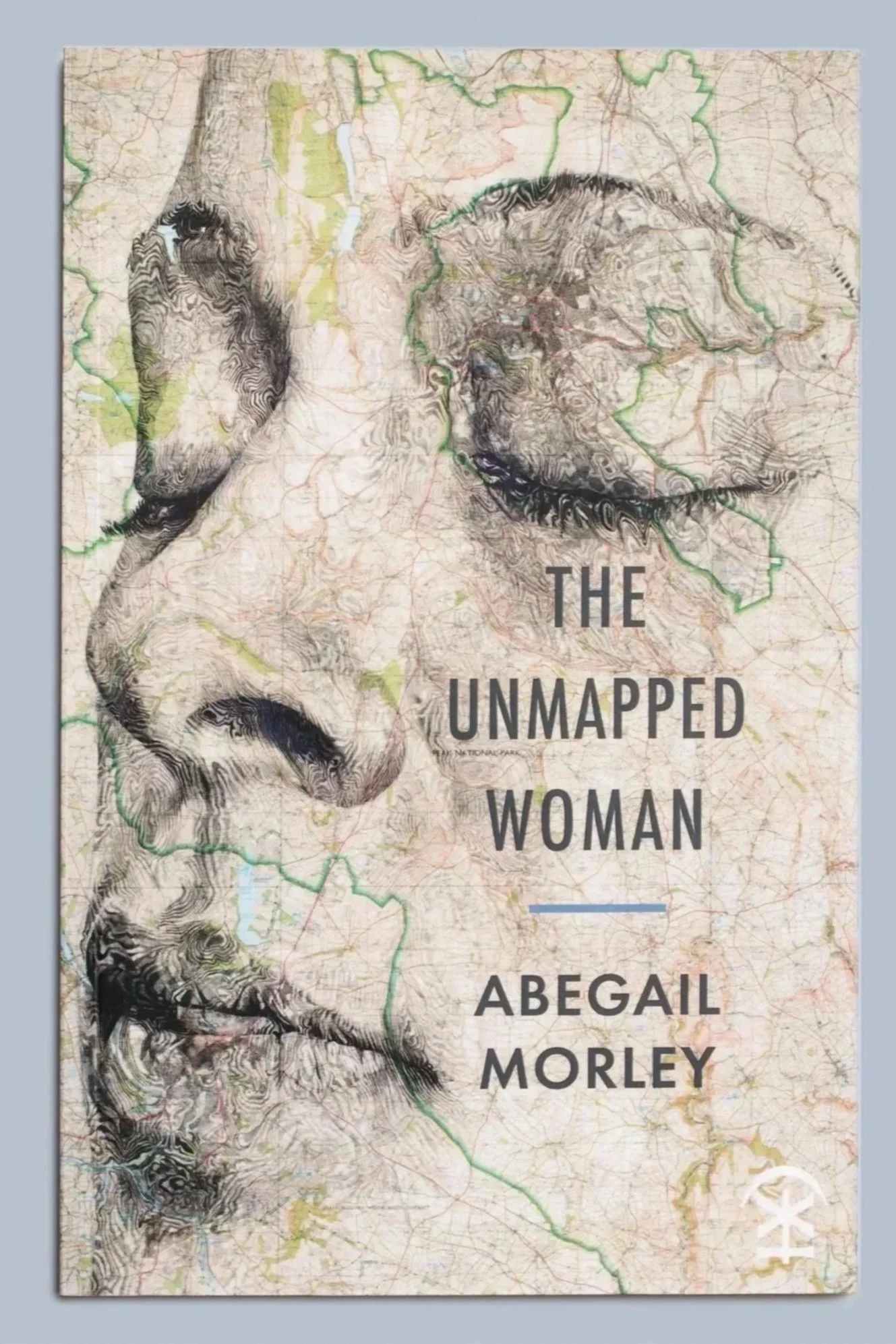
This deeply moving new collection from Abegail Morley explores the altitudes of trauma, mapping the stark new territory that loss leaves behind, where the landmarks of absence overfill with memories, where the missing loom large, casting their unshifting shadow.
‘In The Unmapped Woman, Morley writes with astonishing technical virtuosity as she searches for recovery through art. As in her previous poems, water is a recurrent motif and the emotional core of the collection. Narrative and emotion are compressed within the single telling image, and the spaces between words, lineation and enjambment recollect the lost presence from where the poems emerge. George Eliot reminds us that ‘there is a great deal of unmapped country within us which would have to be taken into account in an explanation of our gusts and storms’. If Eliot seems to imply that what is most distinctive remains hidden, Morley speaks in a voice that is eloquent and precise as she seeks to understand what happens to the vanished.’
Nancy Gaffield
‘This collection, its probing intensity, is reminiscent of contemporary American masters like Louise Glück, Sharon Olds, and Caroline Forché, yet decidedly British in tone... these are poems to live with – tight as the skin of a drum.’
Robert Peake
The Unmapped Woman (2020)
ISBN: 978-1911027911
The Unmapped Woman | Nine Arches Press
Abegail Morley is a natural poet. Each poem seems exhaled in a single necessary breath as she unflinchingly addresses traumatic events. Her language is fresh, fluent and unadorned, with strikingly accurate images, and endings that make the reader re-consider the whole poem. The loss of a baby, suicide of a loved one and the concomitant depersonalisation of the self that dealing with such grief brings is covered with a magical lightness of touch. This is a highly talented, original voice well worth listening to.’
Patricia McCarthy
The Skin Diary
Abegail Morley’s The Skin Diary confronts loss in its many forms with unwavering and astonishing clarity, an incandescent thread running through every line that makes each alive with fierce and steely energy.
Here are alert and lyrical poems that hunt out imperfect hiding places, conjure up imaginary sisters and try to contain near-impossible sorrows that spill out of carrier bags and fill up archives. New skins and old disguises are stitched together, the fabric of life tries to hold fast whilst all else unravels and comes apart at the seams. The Skin Diary documents the sometimes fragile and strange windfalls of our days and months; through hard times and thin ice, this journal is bleakly wry, brilliantly focused and brimming with uncanny and discomforting turns of event.
The Skin Diary (2017)
ISBN: 9781911027041
'In The Skin Diary, potentialities of memory and sensation are nuanced, subtle, and limned in relationship to suffering, betrayal, and loss. Fluidities of image and rhythm create an individual and musical voice to carry the reflections and echoes the poet shivers across the mirroring surfaces and abysses of her ghostly, visceral, and unflinching poems.'
Penelope Shuttle
'In sixty or so poems, [Abegail Morley] exposes suffering in all its urgencies – the disorientation caused by a death, self-disgust after a break-up, the sense of longing for siblings that have never been, but who are mourned, keenly. Morley often skids into the hypothetical; in her poetry, the distinction between lived life and imagined if-onlys feels as thin as Bible paper.'
Leaf Arbuthnot
Full review Permutations of pain | TLS
Morley's tight poems unlock the prescient pain of childhood that reflects later on in loss; when she writes some pain/ is more intense than others there is a sense that our pain can be limitless, but this collection seems to compartmentalise and analyse our human limitless capacity for pain and also our human limitations, with an emotional erudition that lifts even the banal into the realms of concatenating and complex subjective psychoanalysis. A life can be held within the construct of one person's poetic contribution, and here is a poet who can hold her nerve and her entire psychological landscape within each multifariously conceived and consciously humane line.'
Melissa Lee-Houghton
Eva and George – Sketches in Pen and Brush
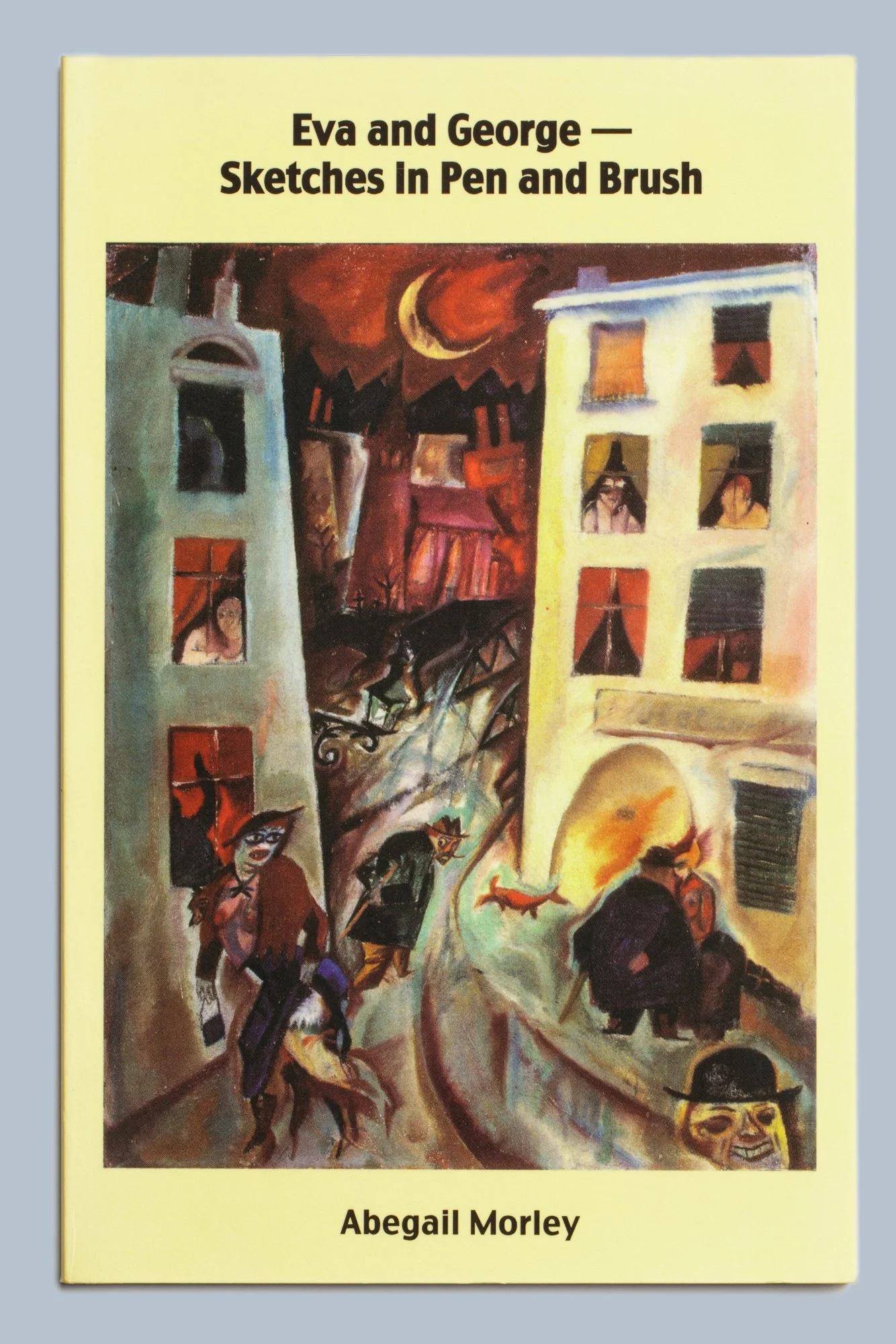
A poetic account of the life of the artist George Grosz told through the voice of his wife, Eva Peter. An affecting sequence, Morley impresses with a startling account of a private and public existence in a Germany transforming itself after the First World War. Stark images of despots and outcasts mirror the artist’s paintings, but Morley’s engaging account of passion and malice, and dramatic exploration of Grosz’s inspiration, adds more colour to a richly imaginative collection. Includes illustrations, photographs and drawings from the Grosz Family Estate.
Eva and George — Sketches in Pen & Brush (2013)
ISBN: 978-0957329034
Pindrop Press | Eva and George
‘Abegail Morley's sequence, Eva and George – Sketches in Pen and Brush, marked by both authenticity and originality, impresses with startling imagery and the striking juxtaposition of the private and the public. Her poetic account of George Grosz and Eva Peter's life in the Weimar Republic is at the same time a compelling panorama of a whole era characterized by struggle, violence and radicalism.’
Wolfgang Görtschacher,
Poetry Salzburg Review
‘These are fine, hard-bitten poems with the imaginative strength and resonance to stand alongside the work of George Grosz without being in any way diminished by it. The realisation of Eva Peter's voice is a triumph, and introduces Abegail Morley as one of our most impressive and rewarding poets.’
Peter Bennet
‘Abegail Morley skilfully captures the rawness of George Grosz's acerbic images of despots and outcasts in post WWI Germany, while tenderly evoking a portrait of the man behind the art. In lucidly-voiced poems spoken by his wife, Eva Peter, she explores the passion and compassion that drove him. In doing so, she reminds us of the casual and calculated malice we are capable of inflicting on each other in daily living, and that 'We are those passers-by.’
Heidi Williamson
‘An affecting sequence, Morley impresses with a startling account of a private and public existence in a Germany transforming itself after the First World War. Stark images of despots and outcasts mirror the artist's paintings, but Morley's engaging account of passion and malice, and dramatic exploration into Grosz's inspiration, adds more colour to a richly imaginative collection.’
PBS Bulletin
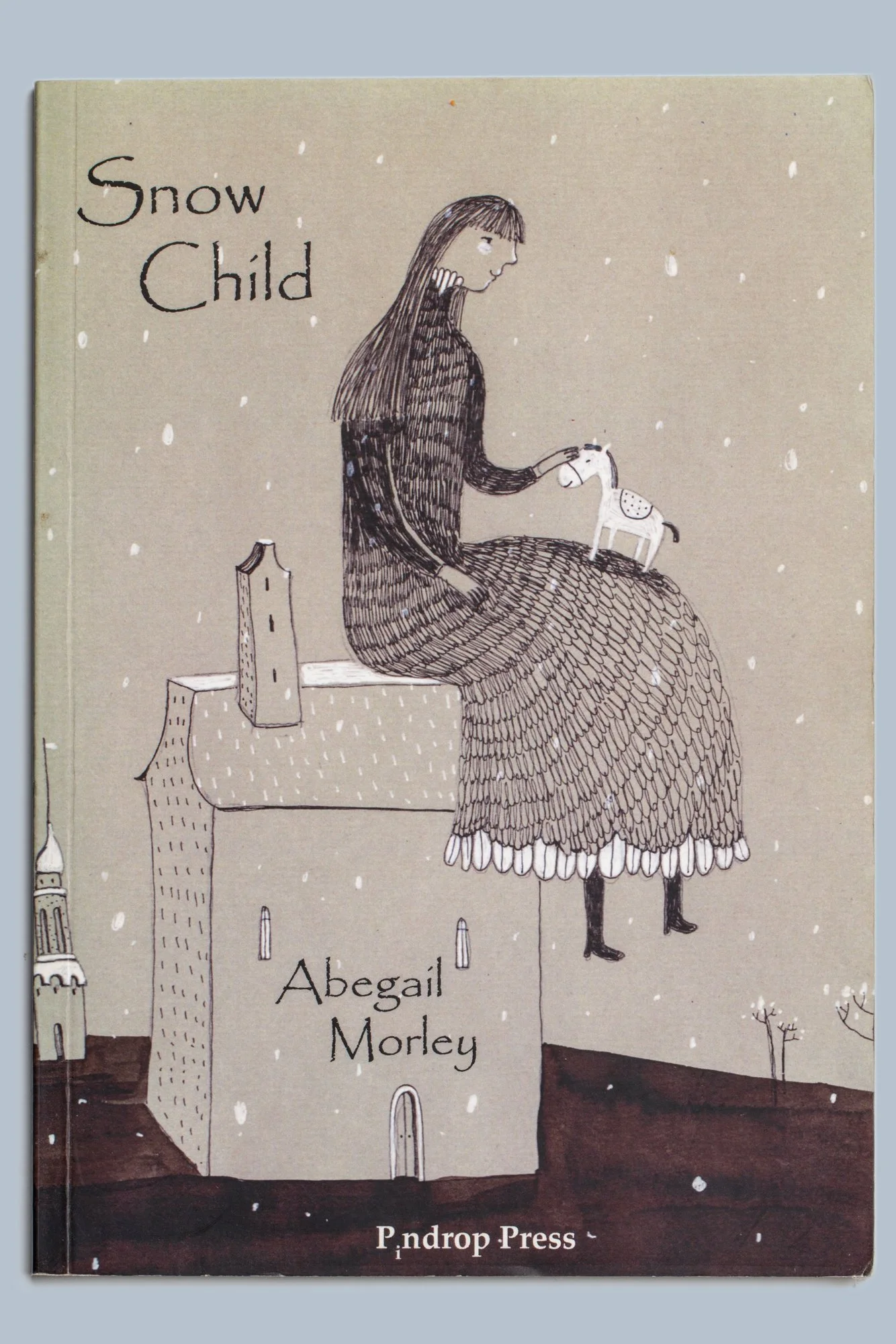
Snow Child
In this startlingly original collection, wallpaper lifts its lip and snarls, questions hide in pockets, a thief steals the letters from a woman's name. Here are poems that speak of the darkness of menace, betrayal, grief in language that is as bright, as fluid as quicksilver; they also speak of what it is to survive these ordeals, to pin them wriggling to the page.
Snow Child (2011)
ISBN: 978-0956782243
‘[Abegail Morley has] a talent for the cool, long-lined lyric. Snow Child, her second collection, is rife with the viscerally felt modulations of a mind ill at ease’
Leaf Arbuthnot,
Times Literary Supplement
"Abegail Morley's Snow Child gifts us bold, unflinching, memorable poems, dazzling in their precision and clarity. This is a poet who faces life's wonders, complexities and losses head-on, and invites us on a lyrical journey which will, at times, take our breath away."
Catherine Smith
‘At the heart of Abegail Morley's powerful second collection is a deep sense of loss. The poems work at countering that loss with tangible visceral images that both disturb and sing with their own gorgeousness. Morley has captured just what it feels like to be living inside a skin so thin, the sun burns right through in all its lucid glory.’
Helen Ivory
‘Intensely personal poems of love, desertion, obsession, written with great skill and delicacy yet with a disturbing sparsity and uncanny detachment. Snow Child is a captivating and impressive collection."
Malcolm Carson
How to Pour Madness
into a Teacup
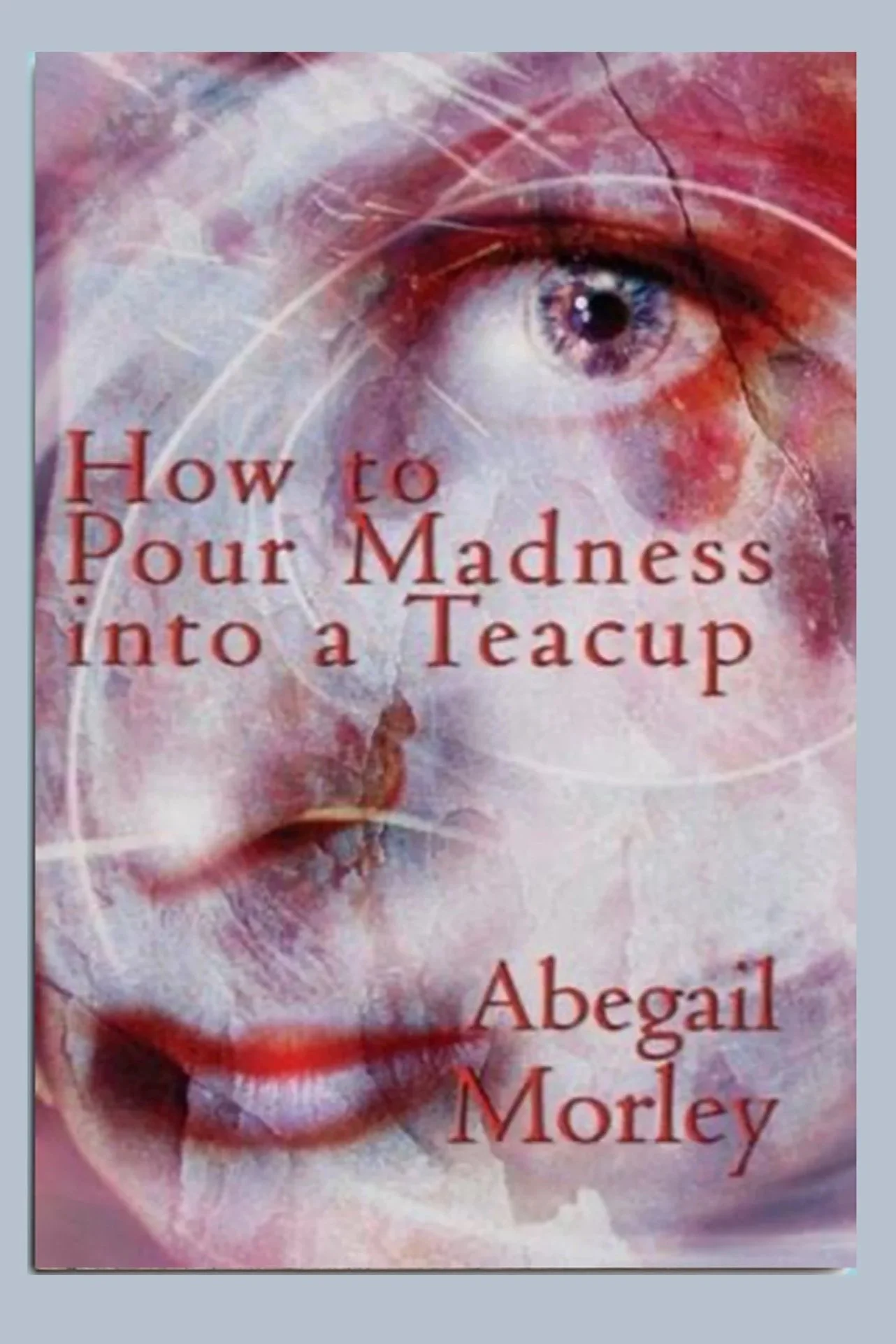
Shortlisted for the Forward Prize Best First Collection. How to Pour Madness into a Teacup is a compelling first collection from a poet whose exploration of mental illness is acutely observed, wry, poignant, dark and humane. Deceptively simple poems are layered with precise observations and meaning that resonates long after reading. Lucid and accessible, this is poetry that takes risk with stunning results.
How to Pour Madness into a Teacup (2009)
ISBN: 978-1907090004
Cinnamon Press
‘It has fallen to Abegail Morley to draw aside the veil suspended between the world we know and the unholy of unholies that lies beyond. We are shown the painted veil of everyday life, only to have it slashed with a knife before our eyes, allowing us to glimpse the horror that lies within, sometimes frightening but always lit with a strange visionary beauty. Morley’s poems are daredevil ambassadors to a savage place.’
Hugo Williams
In the Curator’s Hands
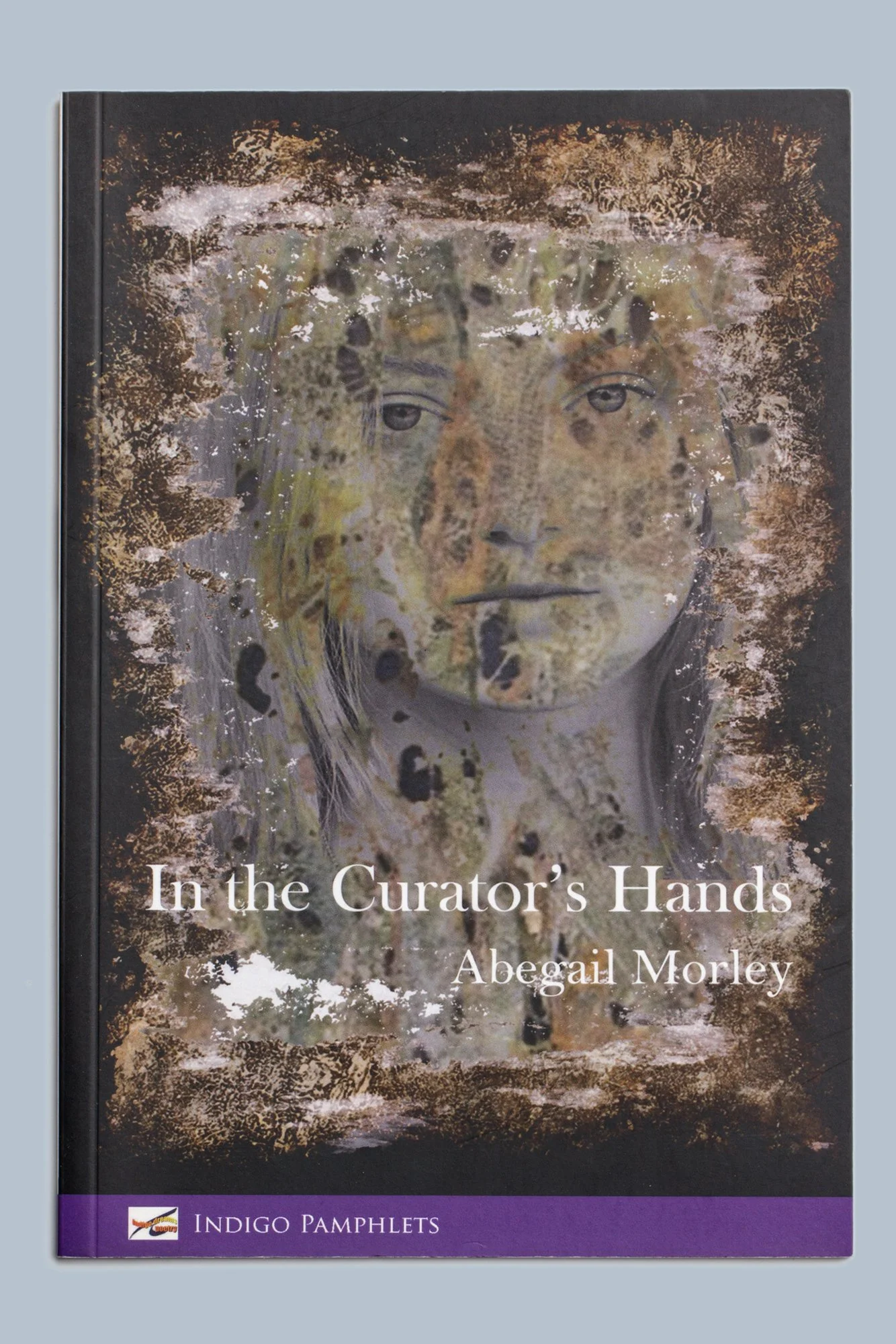
In Abegail Morley’s latest work, she takes on the voices of books, paper, documents, photographs and characters to create and curate a dystopian archive.
‘These are claustrophobic poems about degradation: of matter, the body, relationships, knowledge, and the certainty of words. In the underworld of the archive, Morley aims to ‘complicate the darkness.’ Her poems work as preservation techniques to ‘recall the names of those I’ve hoarded.’ Morley knows how to grip her readers’ attention and destabilise certainties in intriguing ways. In the Curator’s Hands is disturbing, intelligent and absorbing.’
Heidi Williamson
The Memory of Water
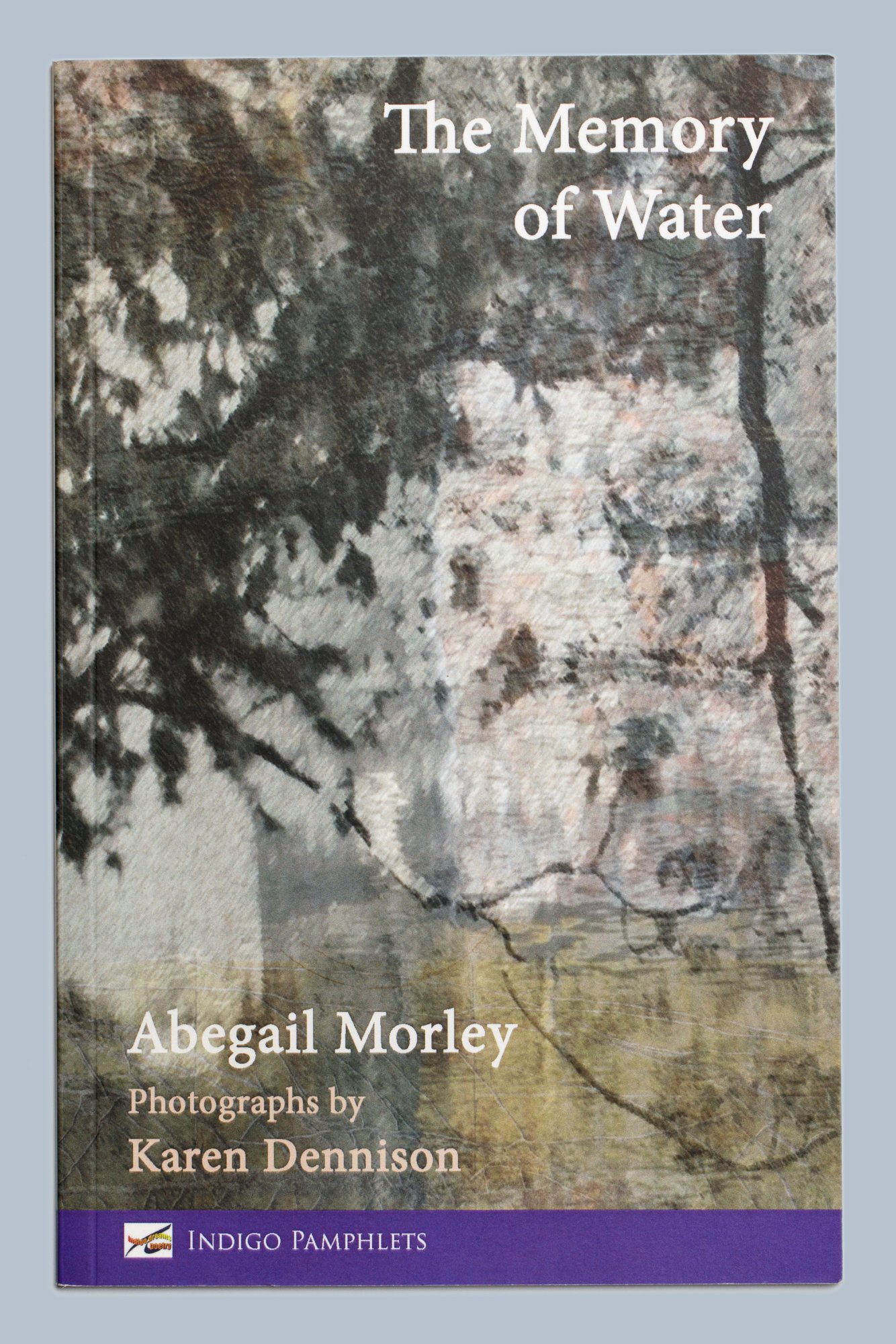
Inspired by a residency in Scotney Castle in Kent, famous for its Medieval moat, these poems bring vivid life to actual voices of the past – a Catholic priest hiding from Elizabeth’s agents, a smuggler disposing of his victim’s body, another murderer faking his own death by filling his coffin with stones – and counterpoints them with invented characters in a music as fluid as their watery medium.
‘With her restless and undaunted imagination, Abegail Morley has already given us three of the most original collections of poetry in recent years. Using the metaphor of water as the carrier of the whispers of history, The Memory of Water takes her ever deeper into her own distinctive world. Beautifully illustrated with six images from Karen Dennison.’
William Bedford